How to Keep Heavy Equipment Productive During Guyana’s Rainy Season
Rain changes the way a job site works. The ground softens. Access roads become harder to manage. Mud builds up faster. Machines work under more stress, and small maintenance issues can turn into real downtime if they are ignored.
For contractors, miners, farmers, and fleet managers in Guyana, the rainy season is not a reason to stop working. It is a reason to manage equipment more carefully. Productivity during this period depends on three things: preparation, operator discipline, and support when something goes wrong.
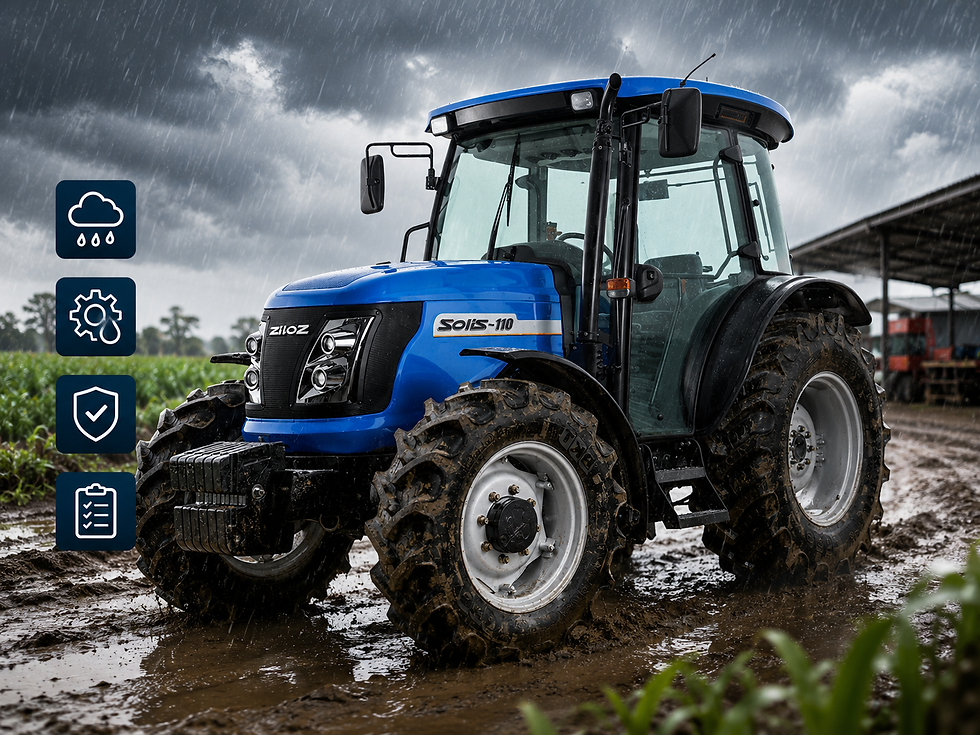
Start with a proper daily inspection
During the rainy season, daily checks matter more. Before a machine goes into work, operators should check fluid levels, filters, lights, tracks, tyres, hoses, pins, buckets, cutting edges, and visible leaks. Mud and water can hide damage, so a quick walkaround is not enough.
Pay close attention to:
Hydraulic hoses
Grease points
Undercarriage components
Tyres or tracks
Electrical connections
Fuel and oil levels
Air filters
These checks do not take long, but they can prevent bigger problems later in the day. A leaking hose, loose fitting, damaged track, or clogged filter can slow down an entire operation if it fails during working hours.
Keep mud from becoming part of the machine
Mud is part of rainy-season work, but it should not stay on the machine longer than necessary.
Heavy mud buildup adds weight, hides wear, traps moisture, and makes inspections harder. It can also affect moving parts, especially around the undercarriage, rollers, tracks, axles, and joints.
At the end of the day, machines should be cleaned properly, especially if they have been working in wet soil, clay, or flooded areas.

Watch the undercarriage closely
The undercarriage takes a lot of punishment during the rainy season. Wet ground, mud, sand, clay, and uneven surfaces all increase wear. Tracks can become packed with material. Rollers and sprockets can carry extra stress. If operators keep pushing without checking, the damage can build quietly.
For tracked equipment, inspect the undercarriage daily.
Look for:
Packed mud
Loose or damaged tracks
Uneven wear
Damaged rollers
Missing bolts
Material stuck around moving parts
Cleaning and checking the undercarriage should be part of the routine, not something done only when a problem appears.
Match the machine to the ground
Some downtime starts before the machine even begins working. If the ground is too soft, the access path is poor, or the wrong machine is assigned to the job, productivity drops quickly. Machines burn more fuel, operators work harder, and the risk of getting stuck increases.
A compact machine such as a Bobcat skid-steer may be better for tight areas and lighter site tasks. A Develon excavator may be the better choice for digging, trenching, and heavier earthmoving. For hauling across rough mining or construction terrain, an articulated dump truck is often more suitable than forcing a standard truck into poor conditions. The right machine reduces strain on the equipment and the operator. That matters even more during rainy months.
Train operators to slow down when needed
Speed can cost more than it saves. During wet conditions, operators need to adjust how they work. Sharp turns, sudden braking, aggressive digging, and overloading can place unnecessary stress on the machine. Good operators protect the equipment while keeping the job moving.
That means:
Avoiding unnecessary spinning
Reducing sharp movements
Keeping loads within the machine’s limit
Using stable routes where possible
Reporting strange sounds or changes early
One small report from an operator can prevent a major repair. If something feels wrong, it should be checked before the machine goes back into heavy work.
Do not delay service because the machine is still running
A machine can still run while a problem is developing. That is where many operators lose time. They wait until the machine fails before calling for service. By then, the repair is often more expensive, and the downtime is longer. During the rainy season, preventive maintenance is worth taking seriously.
Filters, fluids, grease, hoses, electrical systems, cooling systems, and wear parts all need attention. Wet and muddy conditions place more demand on the machine, so service intervals should not be treated casually. Keeping service records also helps fleet owners understand what each machine needs and when.
Keep genuine parts available
Rainy-season delays are frustrating enough. Waiting for parts makes them worse. For machines used in construction, mining, agriculture, and material handling, access to genuine parts can make the difference between a quick repair and days of lost work. Genuine parts are made to match the machine properly. They help protect performance and reduce the risk of repeat failures caused by poor fit or lower-grade replacements. For fleet owners, having critical wear parts, filters, hoses, and service items available before peak demand can help reduce pressure when the season gets difficult.
Use support before downtime becomes serious
Rainy-season productivity is not only about the machine. It is also about the support behind it.
FARMSUP supports customers with equipment, genuine parts, technical service, and on-site assistance for operations across Guyana. Its PSSR Mobile Vans help bring parts, sales, and service support closer to customers who cannot afford long delays during the working season. That kind of support matters when machines are operating far from the showroom or workshop. A site problem should not automatically become a full-day disruption.


